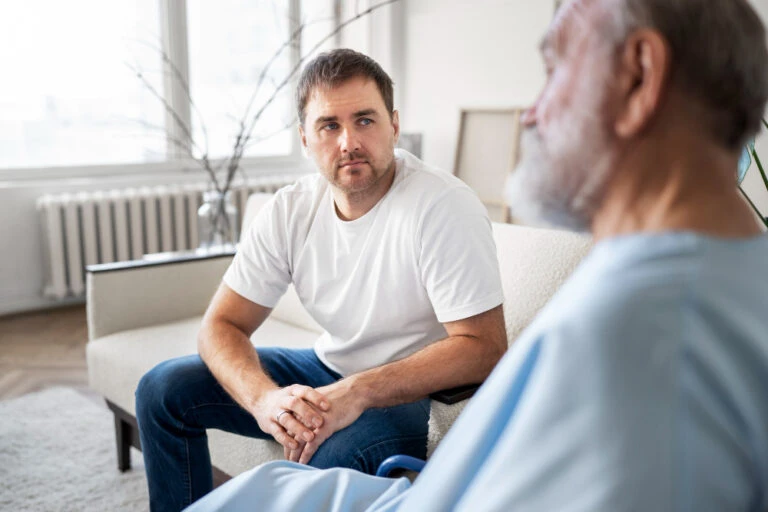


I know the feeling of walking out of treatment thinking, That was it?
You try to stay open-minded. You do the therapy sessions. You share in group when it feels safe. You fill out the worksheets. But deep down, there’s a flatness. Like you’re going through the motions, but not touching the core of what hurts.
When I first heard about a Partial Hospitalization Program, I thought, Why would this be any different? The schedule looked the same—individual therapy, group work, life skills. I’d already done that.
The difference came when I found a program that welcomed faith into the process—not as a checkbox or a requirement, but as a door I could open if I wanted to. That door ended up leading me somewhere I didn’t expect: toward grace I didn’t think I deserved.
Why Faith Can Shift the Same Old Routine
Skepticism is earned. If you’ve tried treatment before and it didn’t click, you have every right to doubt it.
But here’s something I learned: when faith is part of the picture, the tools you’ve seen before can take on new meaning.
- Therapy isn’t just about managing symptoms—it becomes a place to process what you believe about forgiveness and worth.
- Group sharing isn’t just about venting—it becomes a space to connect over shared hope, not just shared struggle.
- Life skills aren’t just about coping—they’re about living in a way that aligns with what you believe matters most.
Faith doesn’t erase the need for clinical care. It deepens it. It roots recovery in something bigger than self-discipline.
Grace for the Days That Feel Heavy
In any treatment program, there will be days you want to quit. Maybe you don’t see progress. Maybe you mess up. Maybe you just can’t find the energy to try again.
Faith can be the reminder that your value isn’t determined by your latest mistake. One client told me, “It was the first time I believed God hadn’t given up on me.” That shift kept them from disappearing when things got hard.
It’s not about suddenly becoming joyful or “fixed.” It’s about having a reason to show up on the days you feel like disappearing.
What Faith-Inclusive PHP Looks Like in Columbus, Ohio
Every program is different, but in a Columbus-based PHP that incorporates faith, you might see:
- Morning devotionals or reflections to set the tone for the day.
- Faith-based support groups where spiritual language and scripture are welcome.
- Therapists who can integrate spiritual questions into clinical conversations.
- Optional prayer or meditation spaces for moments when you need quiet connection.
If you’re looking for a Partial Hospitalization Program in Columbus, Ohio, you can choose a center that respects your beliefs without forcing them.

When Forgiveness Feels Out of Reach
One of the hardest parts of recovery isn’t forgiving others—it’s forgiving yourself.
You might tell yourself, I’ve done too much. I’ve wasted too many chances. That’s where faith can quietly step in with a different voice: You’re still loved. You’re still redeemable.
In a faith-inclusive PHP, forgiveness isn’t just a concept. It’s a practice you can work through in real time—with counseling support, spiritual guidance, and the understanding that grace isn’t something you earn.
Rediscovering Meaning in Familiar Steps
The schedule in a PHP might not look groundbreaking—therapy, skills groups, wellness activities. But when faith is present, each step can feel connected to something bigger:
- Practicing mindfulness can become a form of prayer.
- Learning conflict resolution can become a way of living out your values.
- Setting boundaries can become an act of honoring the life God gave you.
This shift from “just getting through the day” to “living with purpose” can be the difference between leaving treatment unchanged and leaving with a new foundation.
But What If You’re Still Not Sure?
You don’t have to walk in believing.
A faith-inclusive PHP doesn’t require that you’ve got it all figured out. You can be questioning, doubting, even resistant. What matters is that you’re willing to show up and see what happens. Sometimes the smallest moments—a conversation, a prayer you didn’t expect to say, a passage that sticks with you—can open something inside you that was closed before.
FAQ: Faith in a Partial Hospitalization Program
1. Do I have to be religious to join a faith-inclusive PHP?
No. A good program will respect your beliefs and meet you where you are. Faith is an option, not a requirement.
2. How is faith actually integrated into treatment?
It might include optional devotionals, faith-based groups, or therapy sessions where you can explore spiritual questions. It’s about adding depth, not replacing clinical care.
3. Can I still receive evidence-based treatment if I choose a faith-inclusive program?
Yes. Clinical approaches like cognitive behavioral therapy, trauma-informed care, and skills training are still central. Faith is an additional support layer.
4. What if I had a bad experience with religion in the past?
You can share those concerns with your treatment team. A respectful program will never force spiritual practices on you and will create space for you to process past experiences without pressure.
5. Does Freedom Recovery offer faith-inclusive PHP in other Ohio cities?
Yes, Freedom Recovery also offers Partial Hospitalization Program in Dayton, Ohio and Partial Hospitalization Program in Galion, Ohio.
Call (888)643-7567 or visit our Partial Hospitalization Program page to learn more about our Partial Hospitalization Program services in Columbus, Ohio.