


There’s a moment some people reach months or even years into recovery when they quietly wonder, Is this all there is?
The drinking is gone. The chaos has settled. Life looks better from the outside. Yet something still feels disconnected.
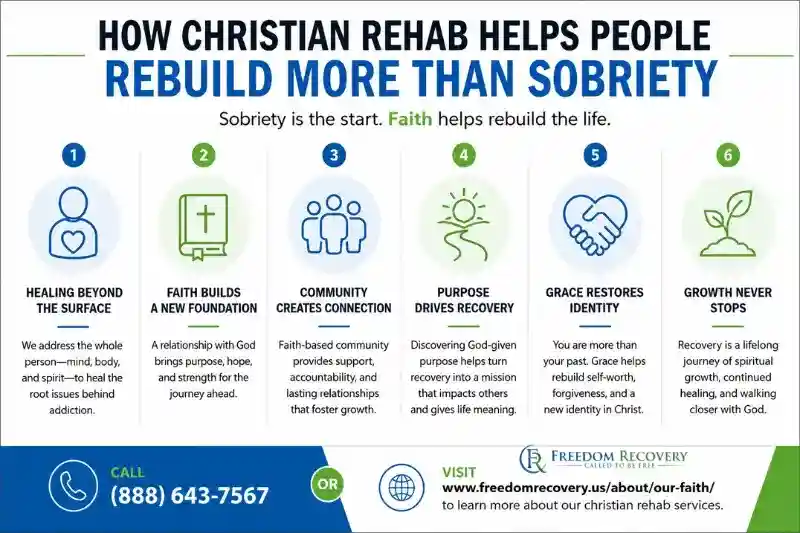
At Freedom Recovery, we’ve seen that lasting healing often involves more than sobriety alone. For many people, faith becomes part of rebuilding purpose, identity, and connection. That’s why our approach to recovery includes spiritual growth alongside clinical care. You can learn more about our faith-centered approach on our Christian recovery page.
Sobriety Solves One Problem, Not Every Problem
Getting sober is a tremendous achievement. It removes the substance that was causing harm, but it doesn’t automatically answer deeper questions.
Questions like:
- Who am I without alcohol?
- What gives my life meaning now?
- How do I reconnect with God after everything I’ve done?
- Why do I still feel empty sometimes?
Many long-term alumni discover that recovery has stages. Early recovery is often about survival and stability. Later recovery becomes about purpose.
The absence of alcohol creates space. The next challenge is deciding what fills that space.
Faith Can Help Rebuild Identity
Alcohol often becomes part of how people see themselves.
The person who always drinks at social events. The person who uses alcohol to manage stress. The person who keeps secrets.
When those patterns disappear, many people feel unsure of who they are.
Christian recovery offers a different foundation. Instead of defining yourself by mistakes, failures, or even your addiction history, faith invites you to see yourself through God’s grace.
That shift can be powerful.
Recovery stops being only about what you’re leaving behind. It becomes about who you’re becoming.
The Question Behind the Drinking Often Remains
Some people search online asking, why can’t i stop drinking.
What they’re often really asking is something deeper.
They may be carrying shame, loneliness, fear, or a spiritual ache that alcohol temporarily masked. Drinking becomes the symptom people can see. The deeper struggle is often harder to identify.
Christian rehab recognizes that people are more than a diagnosis or a behavior. Emotional healing, spiritual growth, healthy relationships, and personal accountability all work together.
A person can stop drinking and still need healing.
Community Matters Long After Treatment Ends
One of the biggest risks for long-term alumni isn’t always relapse.
Sometimes it’s isolation.
Life gets busy. Meetings become less frequent. Friendships change. Faith practices drift into the background. Without realizing it, people can become disconnected from the support systems that once helped them thrive.
Christian recovery communities provide something valuable: people who understand both recovery and faith.
They remind you that growth isn’t finished simply because you’ve accumulated sober time.
It’s ongoing.
Like a campfire that slowly loses heat when left unattended, connection needs tending.
Purpose Creates Momentum
Many alumni reach a point where avoiding alcohol is no longer their primary daily challenge.
The bigger challenge becomes finding purpose.
Purpose may look like serving others. Strengthening family relationships. Mentoring newcomers in recovery. Growing spiritually. Pursuing goals that once seemed impossible.
Faith often helps people see recovery as more than personal improvement.
It becomes an opportunity to live differently and contribute meaningfully.
That’s where many people discover a renewed sense of fulfillment.
Reconnection Is Not Starting Over
One misconception we hear from alumni is that feeling disconnected means they’ve somehow failed.
It doesn’t.
Periods of spiritual dryness, emotional fatigue, or uncertainty happen to many people in long-term recovery.
The important thing is recognizing the feeling and responding to it.
That might mean reconnecting with trusted support systems, spending more time in prayer, returning to recovery meetings, or exploring additional support in Addiction if needed.
For others, it may involve learning about new treatment options in Addiction when life circumstances change.
Reconnection isn’t evidence that recovery isn’t working.
It’s often evidence that you’re still growing.
Recovery Was Never Meant to Stop at Sobriety
Sobriety is an incredible milestone, but it’s not the finish line.
For many people, the deeper work involves rebuilding faith, purpose, relationships, and identity. Christian rehab can provide a framework for that ongoing growth by addressing the whole person, not just the alcohol use.
Years into recovery, the goal isn’t simply avoiding a drink.
It’s building a life that feels meaningful enough that you no longer need one.
Call (888)643-7567 or visit our Christian rehab services to learn more about our christian rehab services in .