


A parent often knows the feeling before they have words for it.
Your child promised they were done. Things seemed better for a while. Then something changed. Maybe it was a missed call, a shift in mood, money disappearing, or a familiar look in their eyes.
If you’re watching your 20-year-old use again, you may be asking a painful question: Why can’t they just stop?
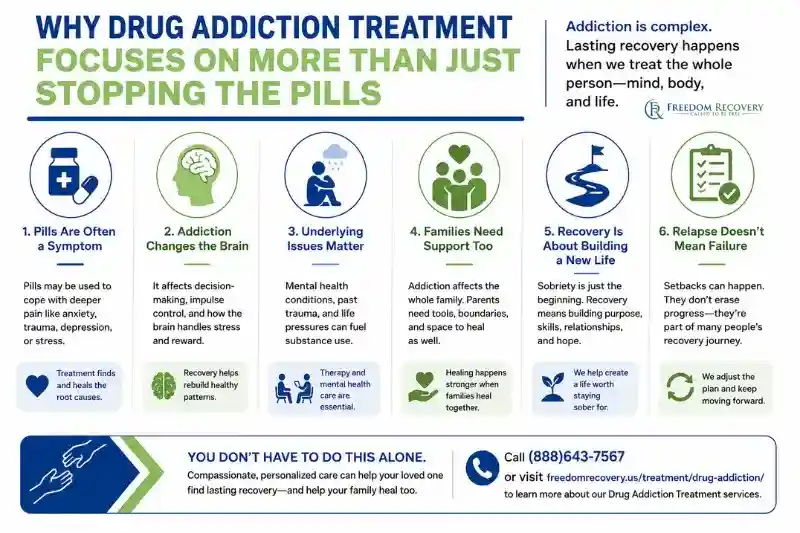
At Freedom Recovery, we hear this question from families every day. The answer is often surprising. Addiction treatment isn’t focused solely on taking pills away because the pills are usually only part of the story. That’s why effective drug addiction treatment looks beyond the substance itself.
Stopping the Pills Doesn’t Automatically Stop the Need
Many parents assume that if the pills disappear, the problem disappears too.
If only it were that simple.
For many people, pills become a way to manage something deeper. Anxiety. Emotional pain. Trauma. Depression. Loneliness. Pressure. Shame.
The pills may create devastating consequences, but they can also serve a purpose in someone’s life. They become a shortcut to relief.
Imagine putting a bucket under a leaking ceiling. Removing the bucket doesn’t fix the leak. It only reveals how much water is still coming through.
Treatment helps identify what’s causing the leak.
Addiction Changes More Than Behavior
One of the hardest realities for families is realizing that addiction affects the brain’s reward system.
Your child may genuinely mean it when they swear they’ll never use again.
Then a stressful day arrives. An argument happens. A difficult emotion surfaces.
In those moments, the brain can push powerful urges that override logic and good intentions.
This is why recovery isn’t about becoming stronger or trying harder. It’s about learning new ways to respond when those moments happen.
A person can love their family deeply, want recovery sincerely, and still struggle to stay sober without the right support.
The Underlying Issues Often Matter as Much as the Substance
Many young adults who struggle with pills are also dealing with challenges that existed before the addiction developed.
These may include:
- Anxiety disorders
- Depression
- Unresolved trauma
- Academic or career pressure
- Social isolation
- Low self-worth
- Difficulty managing emotions
When these issues remain untreated, simply removing the pills can leave someone feeling overwhelmed.
This is one reason treatment often includes therapy, mental health support, family involvement, and skill-building. Recovery becomes more sustainable when the person learns how to navigate life without relying on substances for relief.
Families Need Support Too
Parents often carry an enormous amount of guilt.
You may wonder whether you missed something. Whether you were too strict. Too trusting. Too involved. Not involved enough.
Most parents we meet have already spent years trying to help.
The truth is that addiction is rarely caused by a single parenting decision. Families don’t create addiction by loving too much.
Treatment frequently includes family support because addiction affects entire households. Parents need tools, boundaries, education, and space to heal as well.
Sometimes the strongest thing a parent can do is stop carrying responsibility for choices that aren’t theirs to control.
Recovery Is About Building a Life Worth Returning To
Many people picture recovery as a finish line.
In reality, it’s more like rebuilding a foundation.
Someone who stops taking pills still needs healthy relationships. Purpose. Coping skills. Structure. Accountability. Community.
That’s why treatment often focuses on helping people create a life that feels manageable without substances.
Recovery isn’t simply about saying no to pills.
It’s about having enough reasons to keep saying yes to life.
What Parents Can Look For Right Now
If you’re concerned that your child may be struggling again, trust what you’re noticing.
Some common behavioral changes can overlap with the signs of pill addiction, including:
- Increased secrecy
- Sudden financial problems
- Changes in sleep patterns
- Mood swings
- Isolation from family
- Loss of interest in responsibilities
- Defensiveness when asked simple questions
These signs don’t automatically confirm substance use, but they may indicate that it’s time to have a conversation and seek professional guidance.
Families looking for additional support may also benefit from exploring treatment resources and community-based care, including options for support in Addiction or support in Addiction when local guidance is needed.
Hope Doesn’t Require Perfection
Many parents believe recovery should look like a straight line.
Most of the time, it doesn’t.
Progress can include setbacks. Growth can happen during difficult seasons. A return to use does not erase every lesson learned or every step forward.
If your child is using again, that doesn’t automatically mean treatment failed. It may mean they need additional support, a different approach, or another opportunity to engage in recovery.
What matters most is that help remains available.
Call (888)643-7567 or visit our Drug Addiction Treatment services to learn more about our Drug Addiction Treatment services in .